Building the Big Pine Key house
By Robin
Sunday, September 27, 2009
This article chronicles the construction of our house on Big Pine Key in the Florida Keys (near Mile Marker 30). The house is intended for some time in the future when we retire from cruising the big boat, so we'll rent it out in the meantime. We're really just starting our full-time cruising and we have a lot of places to go to!
We bought the property back in 1992 after looking for the perfect lot in this one neighborhood for about two years. We applied for the building permit about five years ago since it typically takes 7-10 years to get a permit on Big Pine. Our plans changed suddenly when our permit was approved much earlier than expected, but we're happy with the results.

This is the "wild" lot before clearing. The gumbo limbo tree in the center is native, and will be kept on the property.
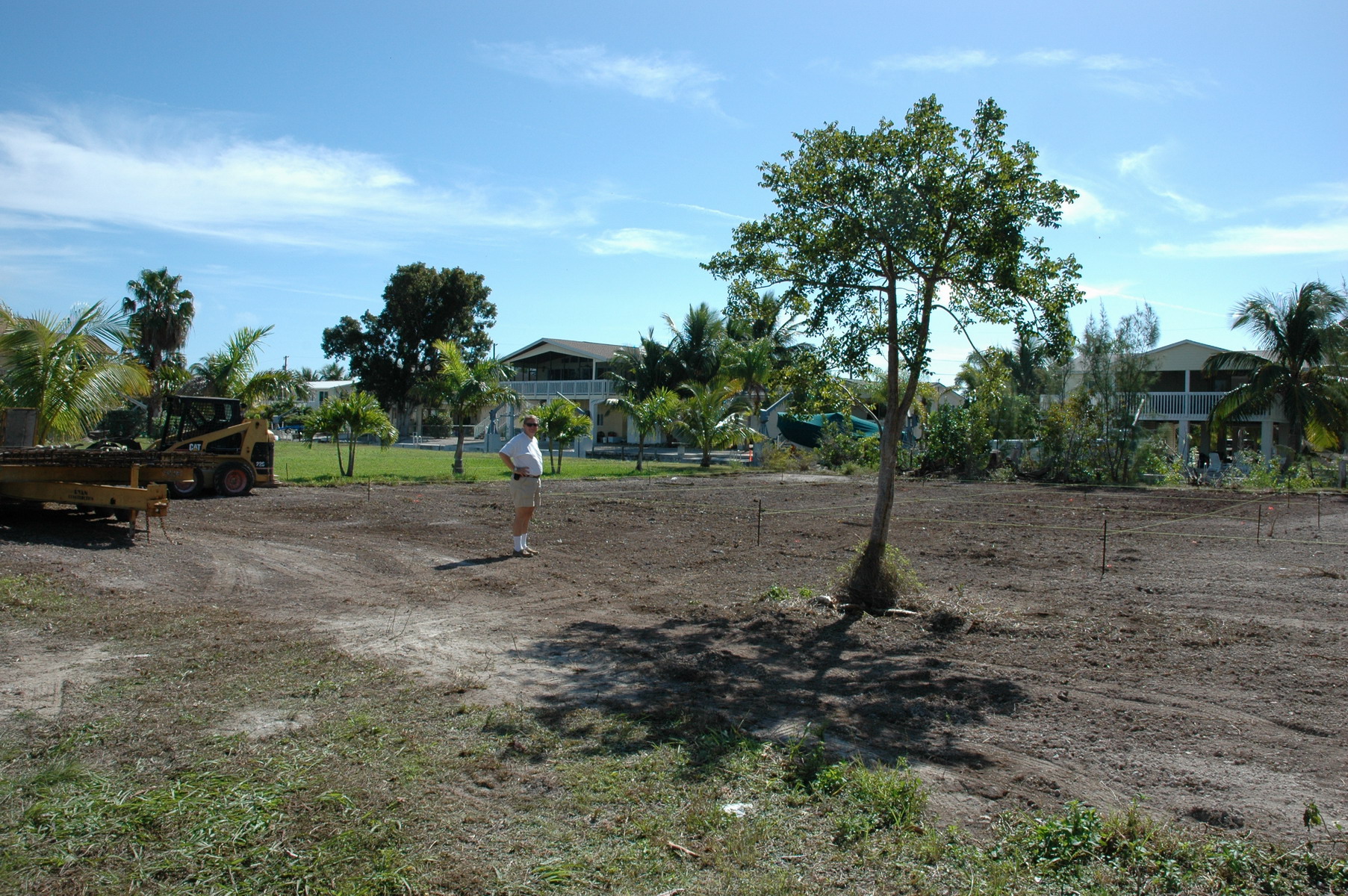
And this is the lot after clearing, with our gumbo limbo tree intact. The gumbo limbo is also called a "tourist tree" since it's bark is always red and peeling.
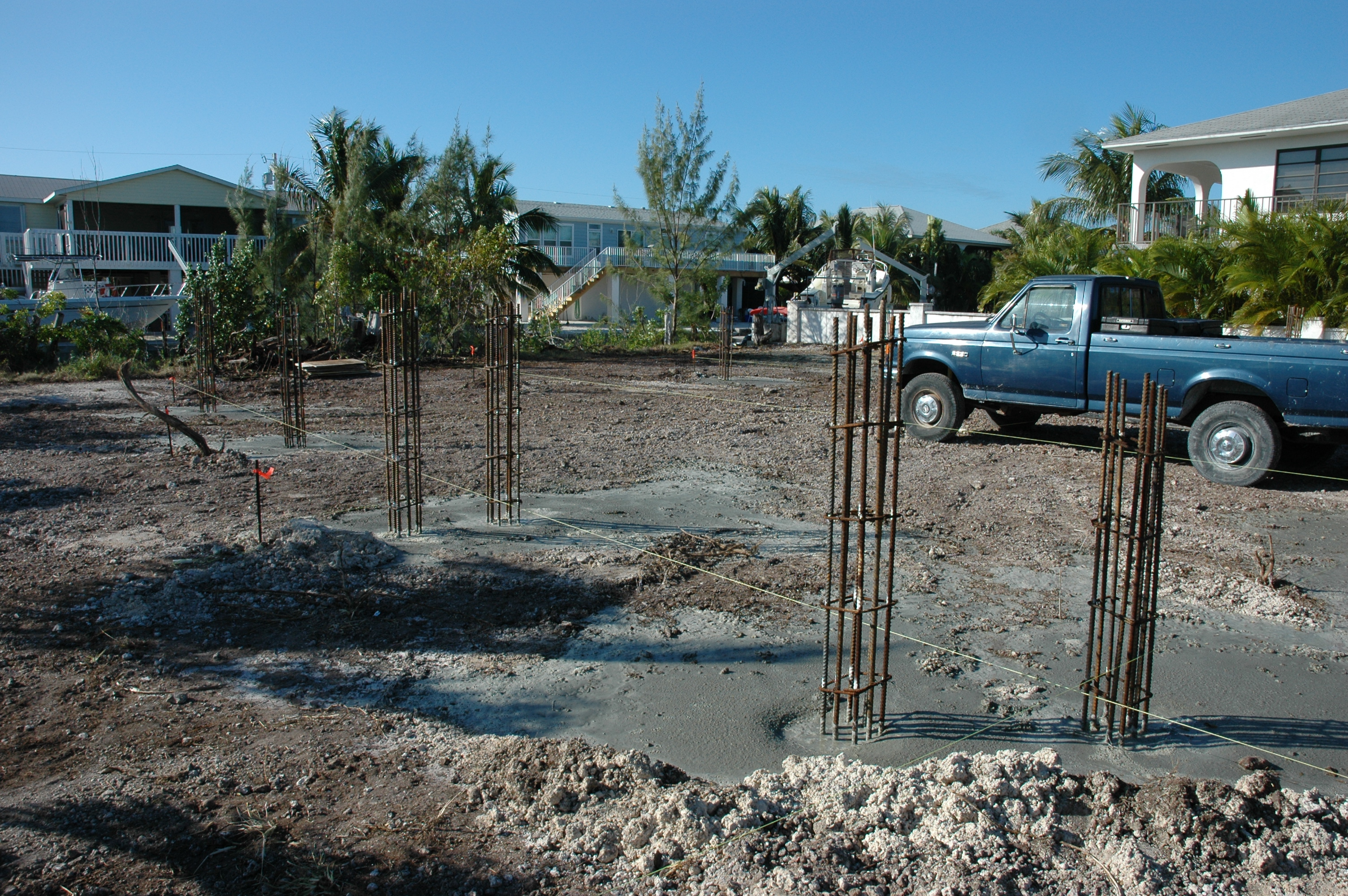
Holes were drilled six and a half feet into the hard marl ground, and rebar box frames and concrete are poured to anchor the structure.
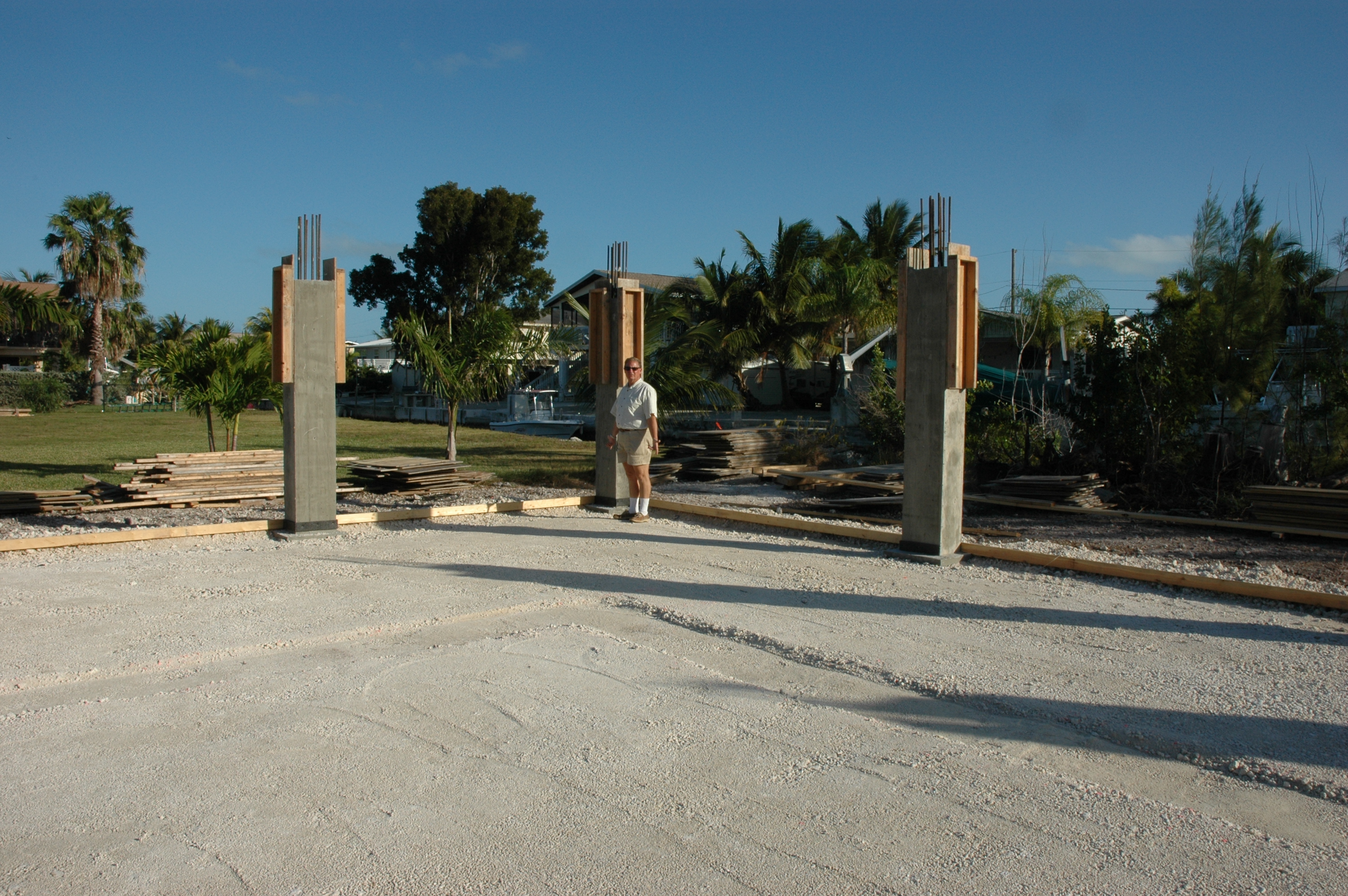
More rebar has been added and concrete poured to form the stilts that the house will stand on, well above flood waters and storm surge.
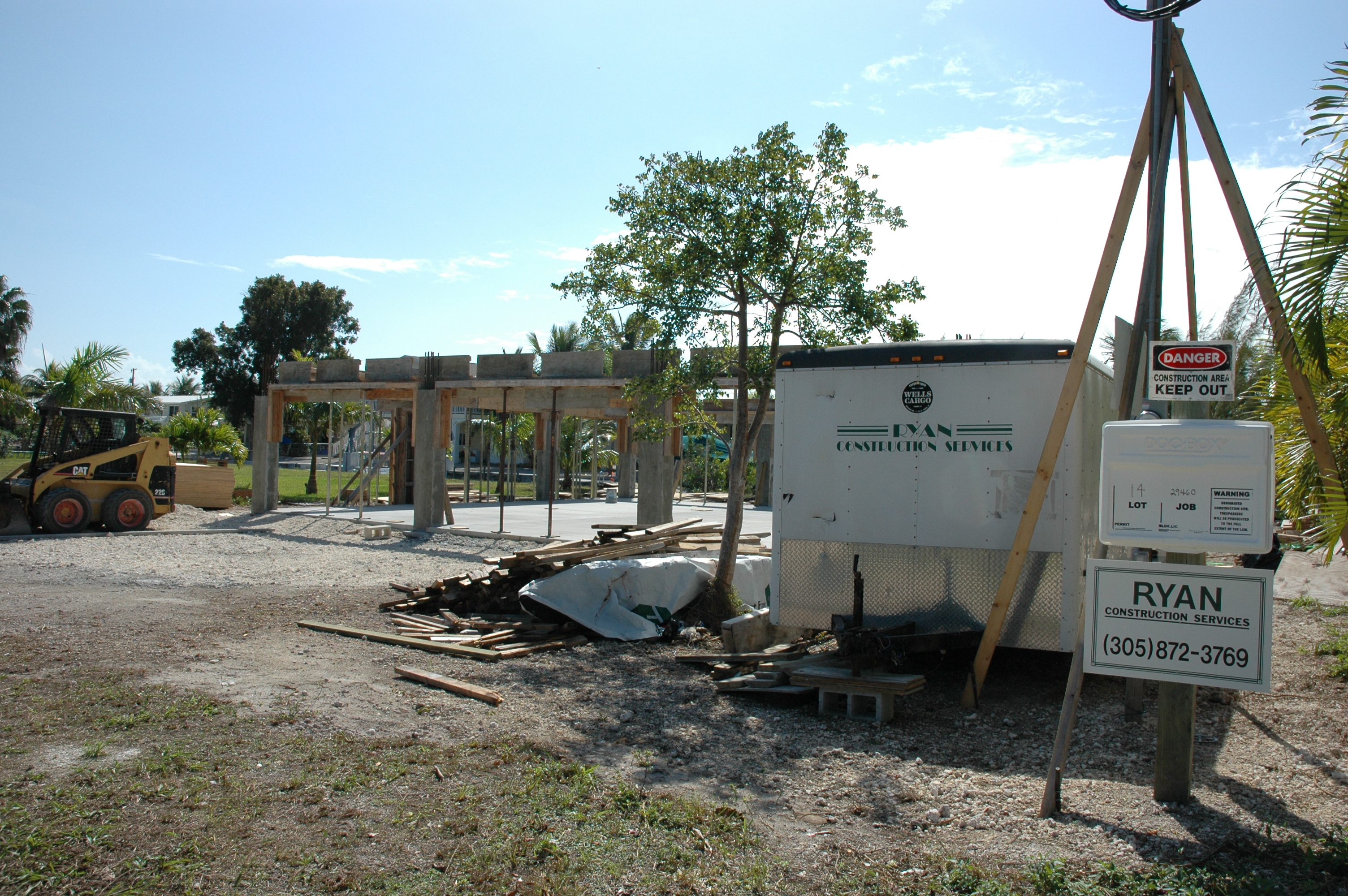
The next phase is to build the forms for the poured concrete ring that ties all the vertical pilings together. The notches in the forms are for the pre-stressed concrete beams that will support the main floor.
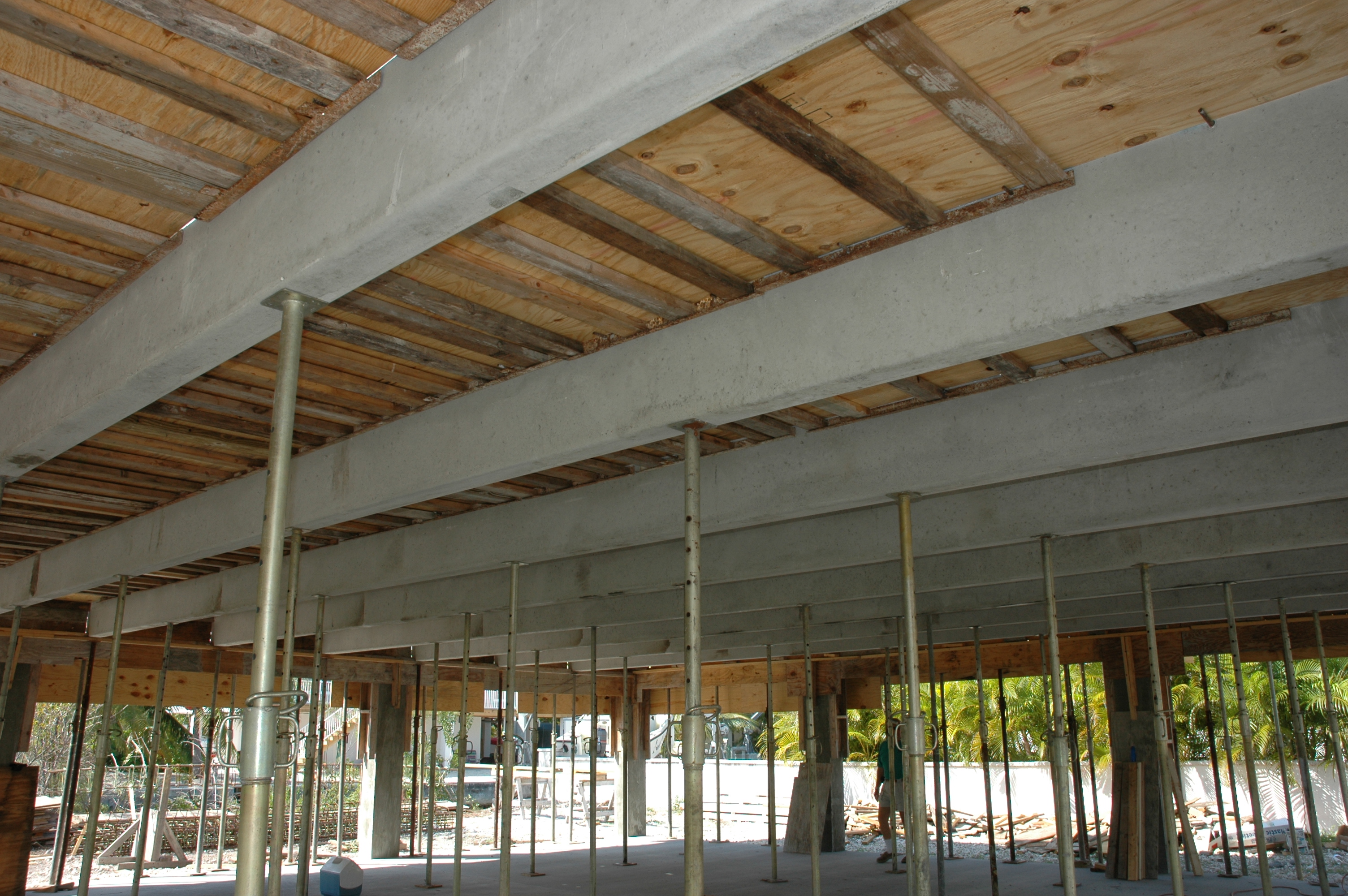
Here are some of the pre-stressed beams in place, with temporary supports while the concrete sets. These pre-stressed beams were developed by the Navy SEABEES in the 50's for building structures in storm-prone areas.
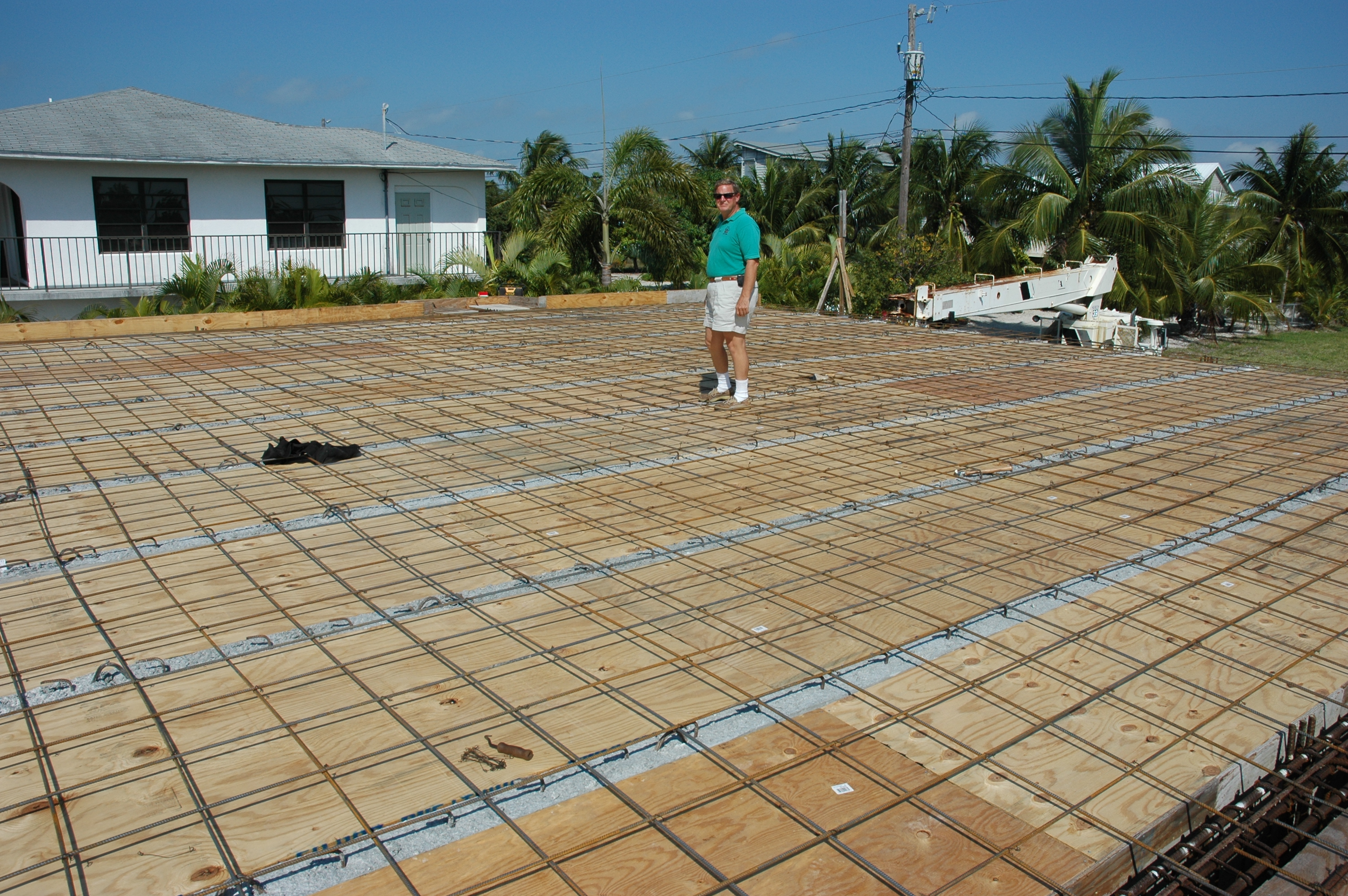
This is the deck for the living level - ready to be poured. It sits about 13' above Mean High Water (MHW), and about 8.5' off the ground.

The walls are built from concrete block that will be locked into the vertical pilings when they are poured.

You can see that the top "ring" of concrete has been poured along with the vertical pilings. The roof trusses will support the crimped metal roof, which is also tied into the concrete and rebar structure, and it is rated to withstand up to 175 MPH winds.
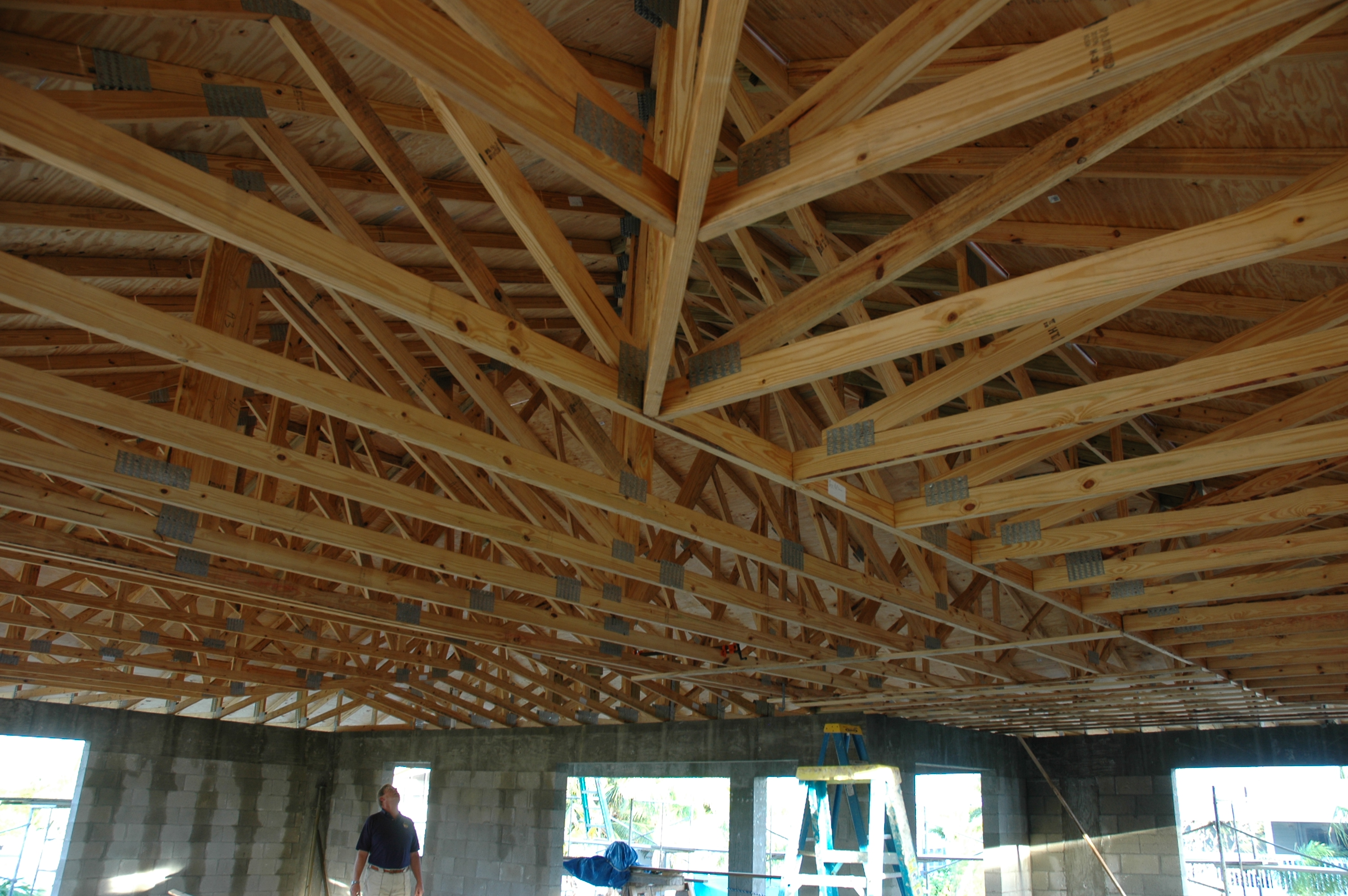
This is just a view of the roof trusses from inside the house.
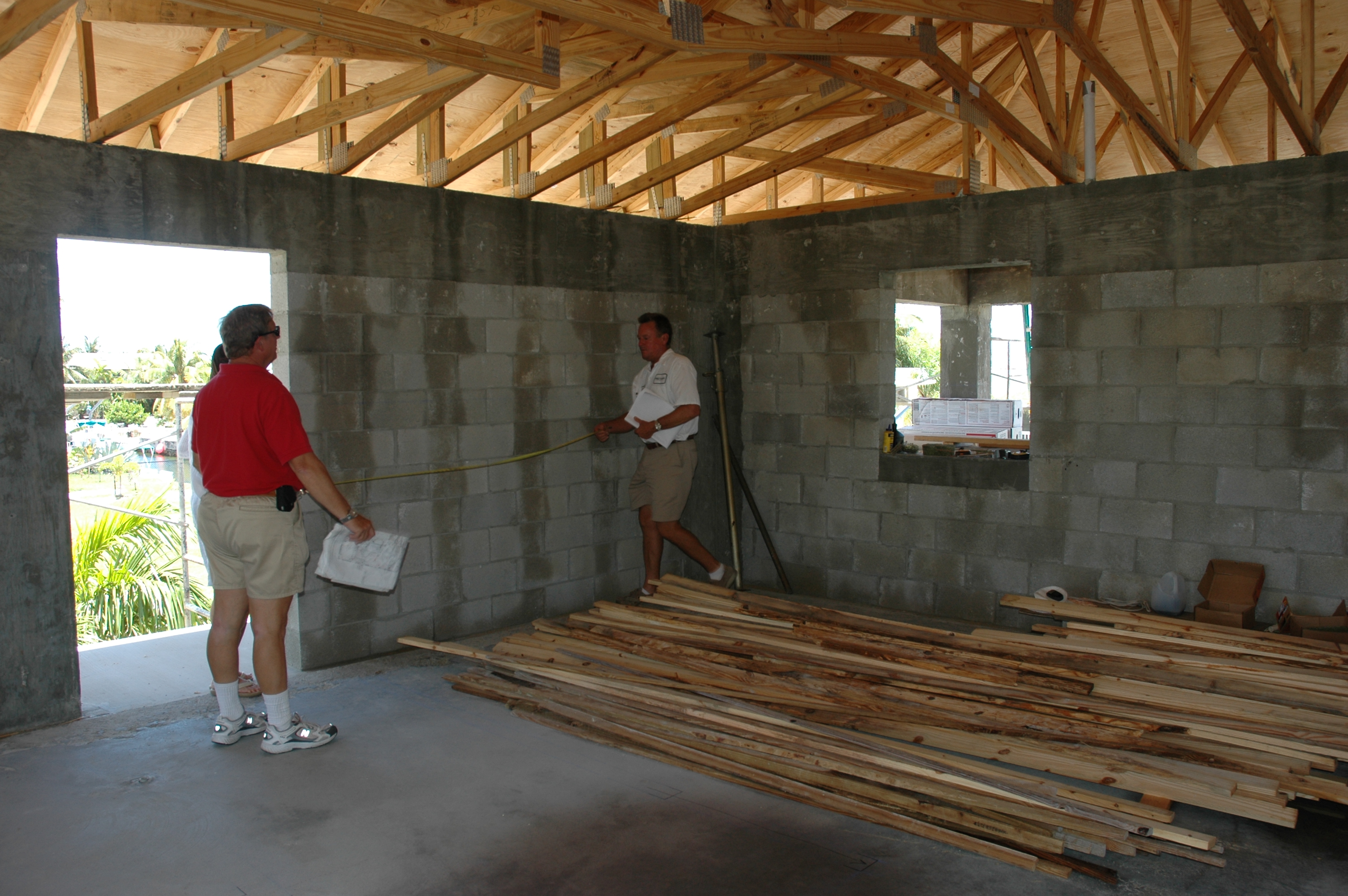
Jim and the builder checking measurements in the kitchen.
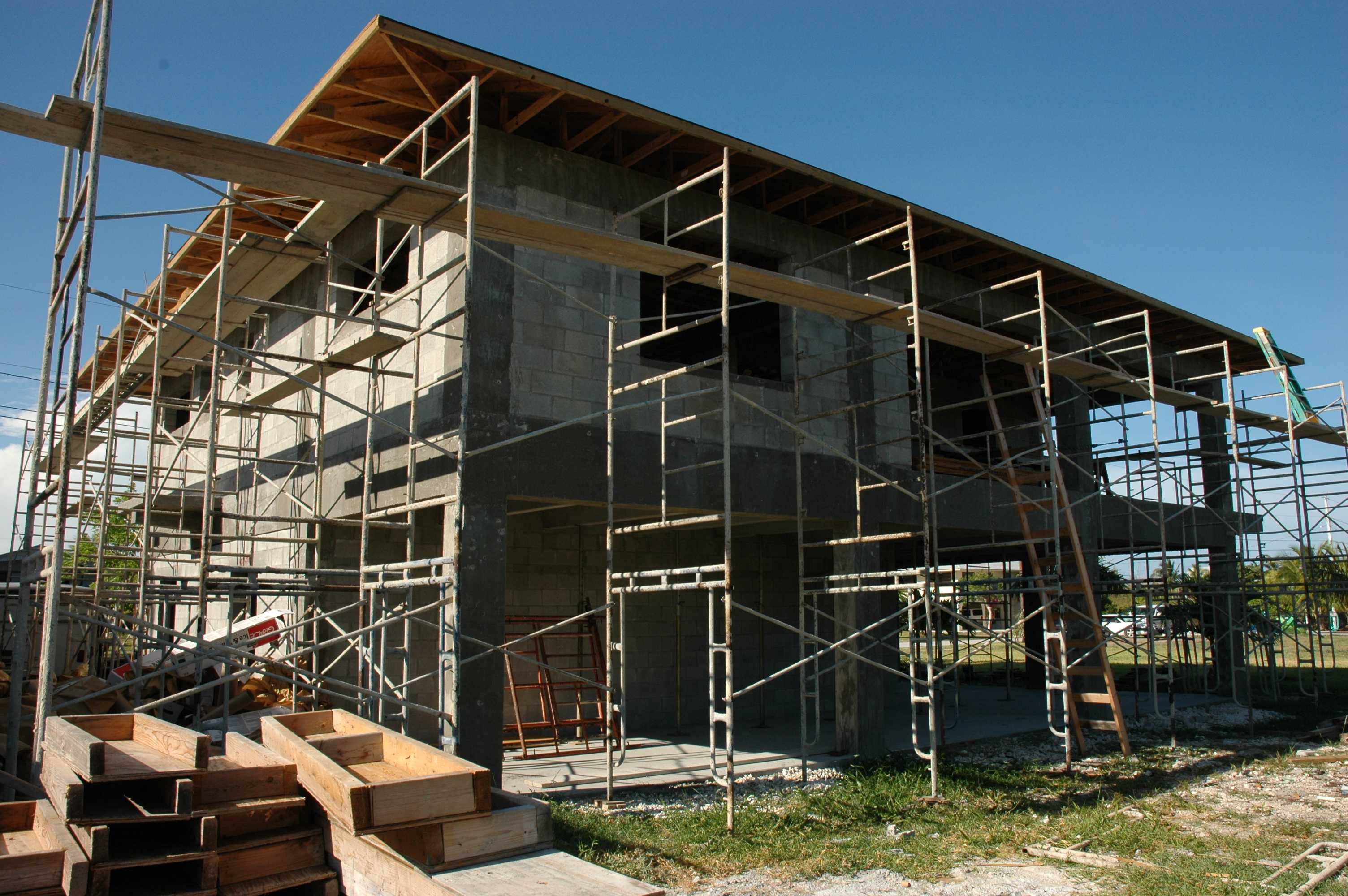
Scaffolding for the crew to install the metal roof.
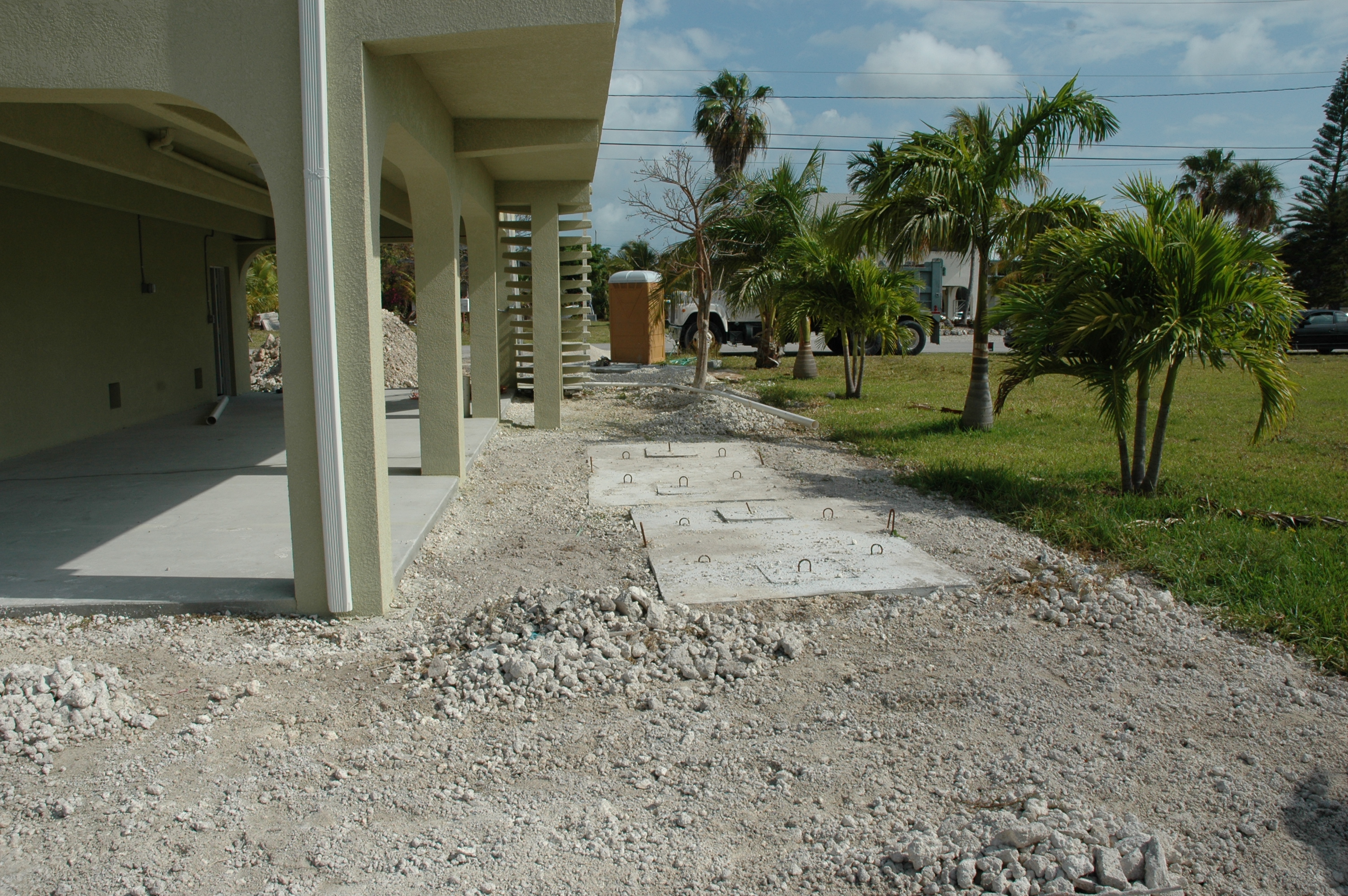
We have two 1250 gallon cisterns that are fed from rain water off the roof - just for watering plants and washing boats. The tops of the tanks are those big concrete rectangles, which will be covered with pea rock. Our primary water supply comes from city water.
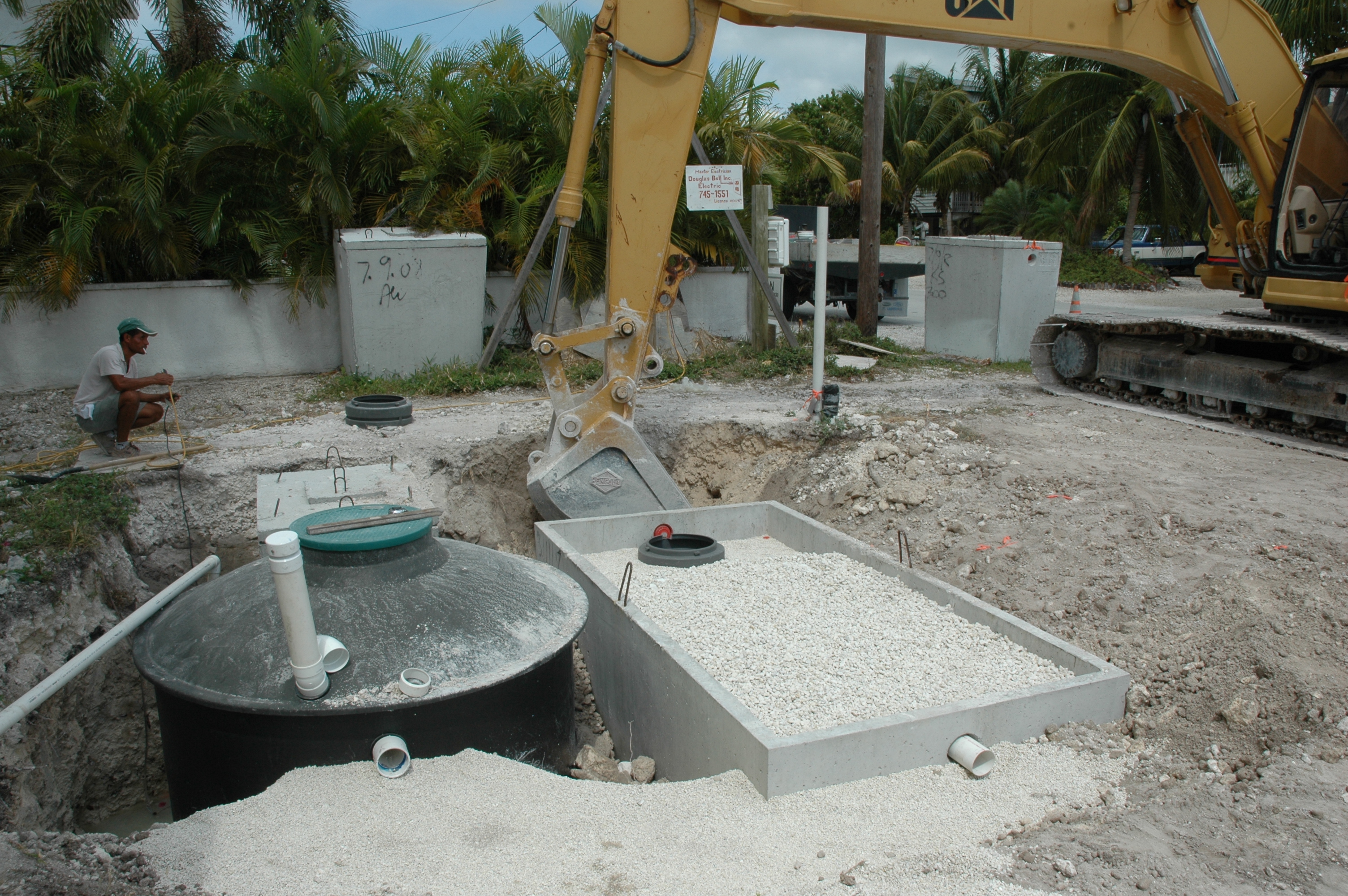
Digging for the septic system composed of five tanks and an aeration pump that eventually goes into a 100' deep bore hole.
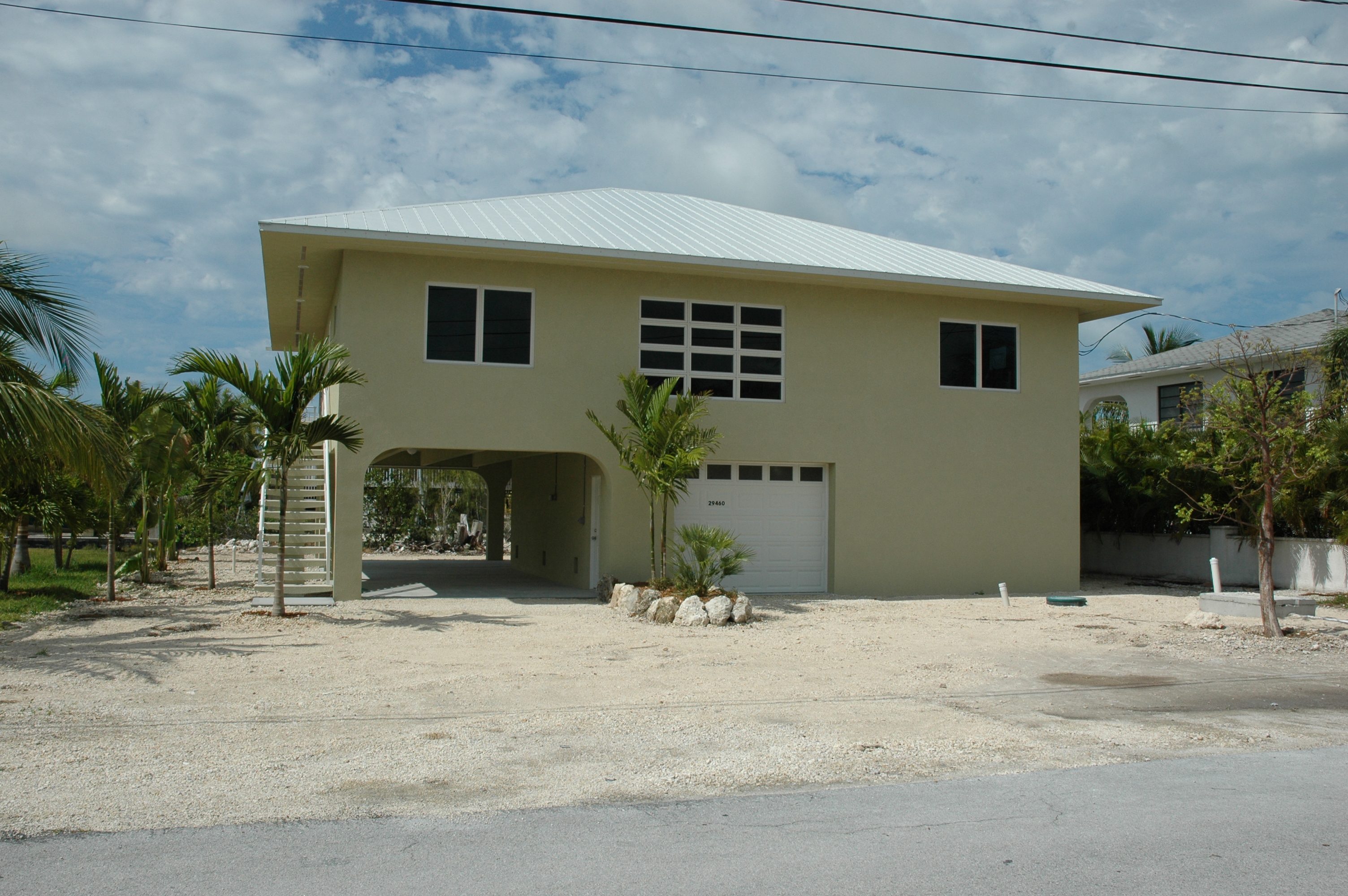
Finally, the house is finished in late May 2009. We broke ground and started the project in January 2008. There is still some window trim to be installed and more landscaping, but that will come when we build the seawall in Fall 2009.
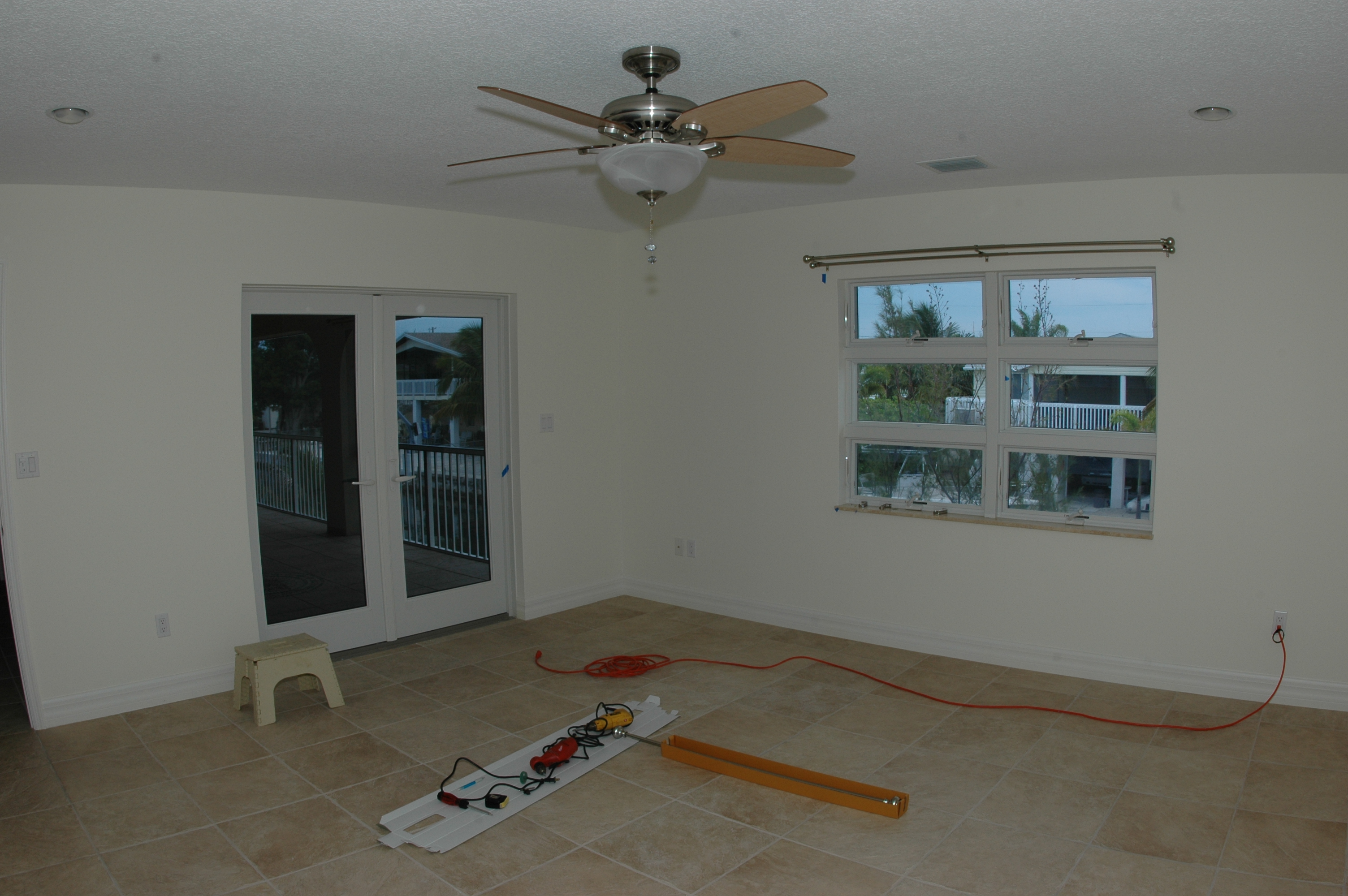
Here's the master bedroom when we're installing some curtain rods. The french doors open out to the screened porch.
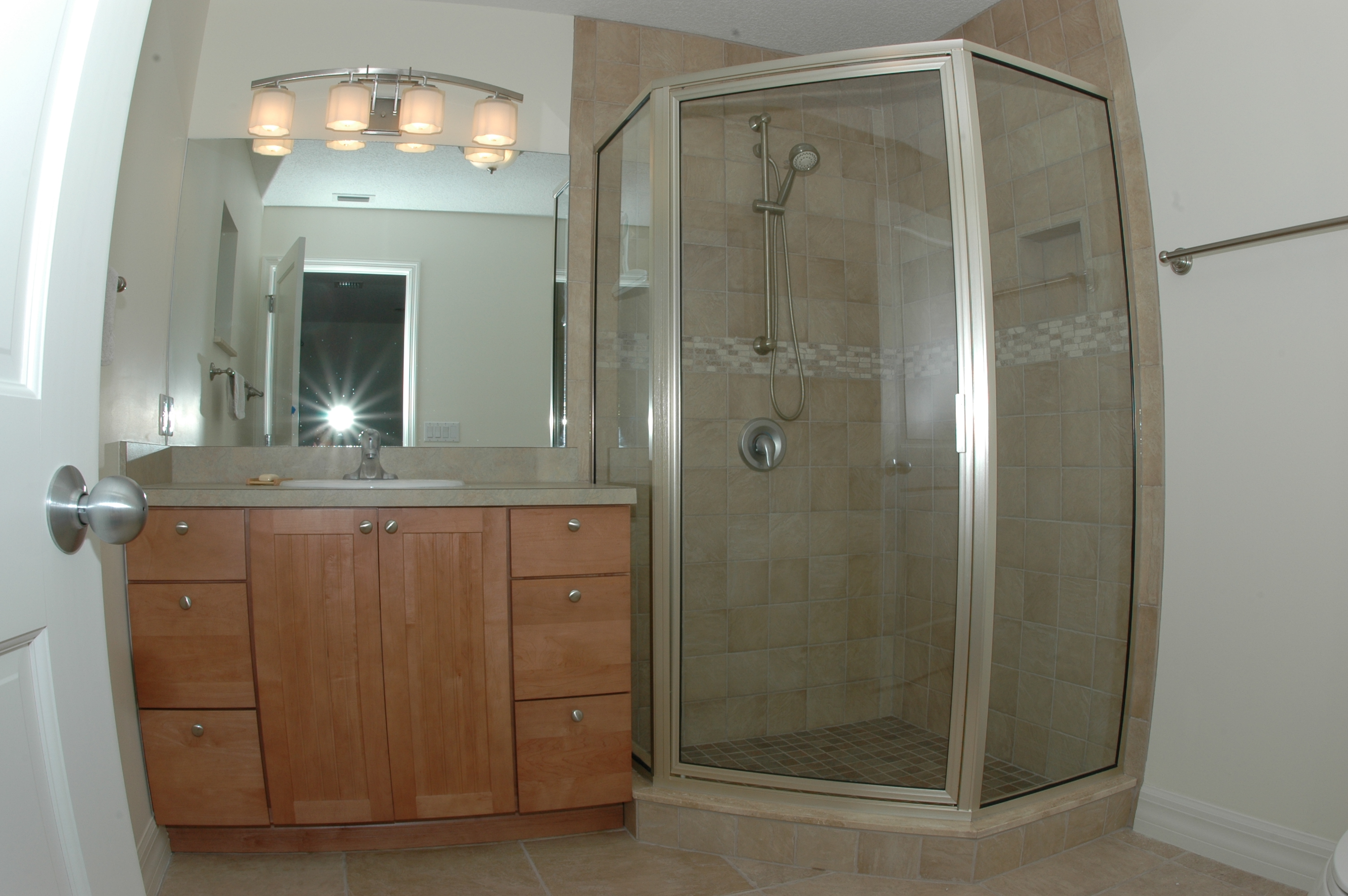
Here's a view of the master bathroom.
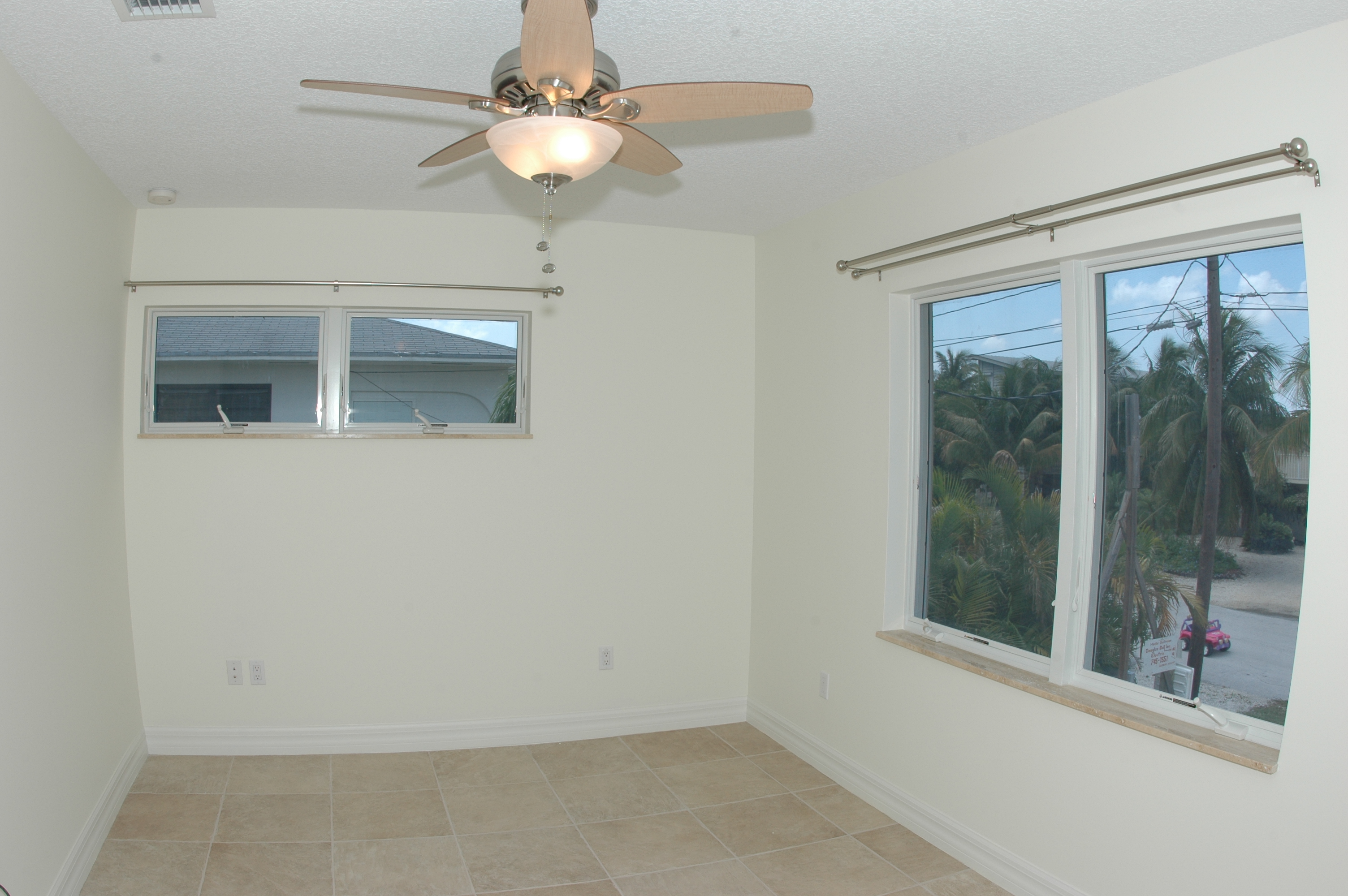
And this is one of the two guest bedrooms - this one is next door to the guest bath.
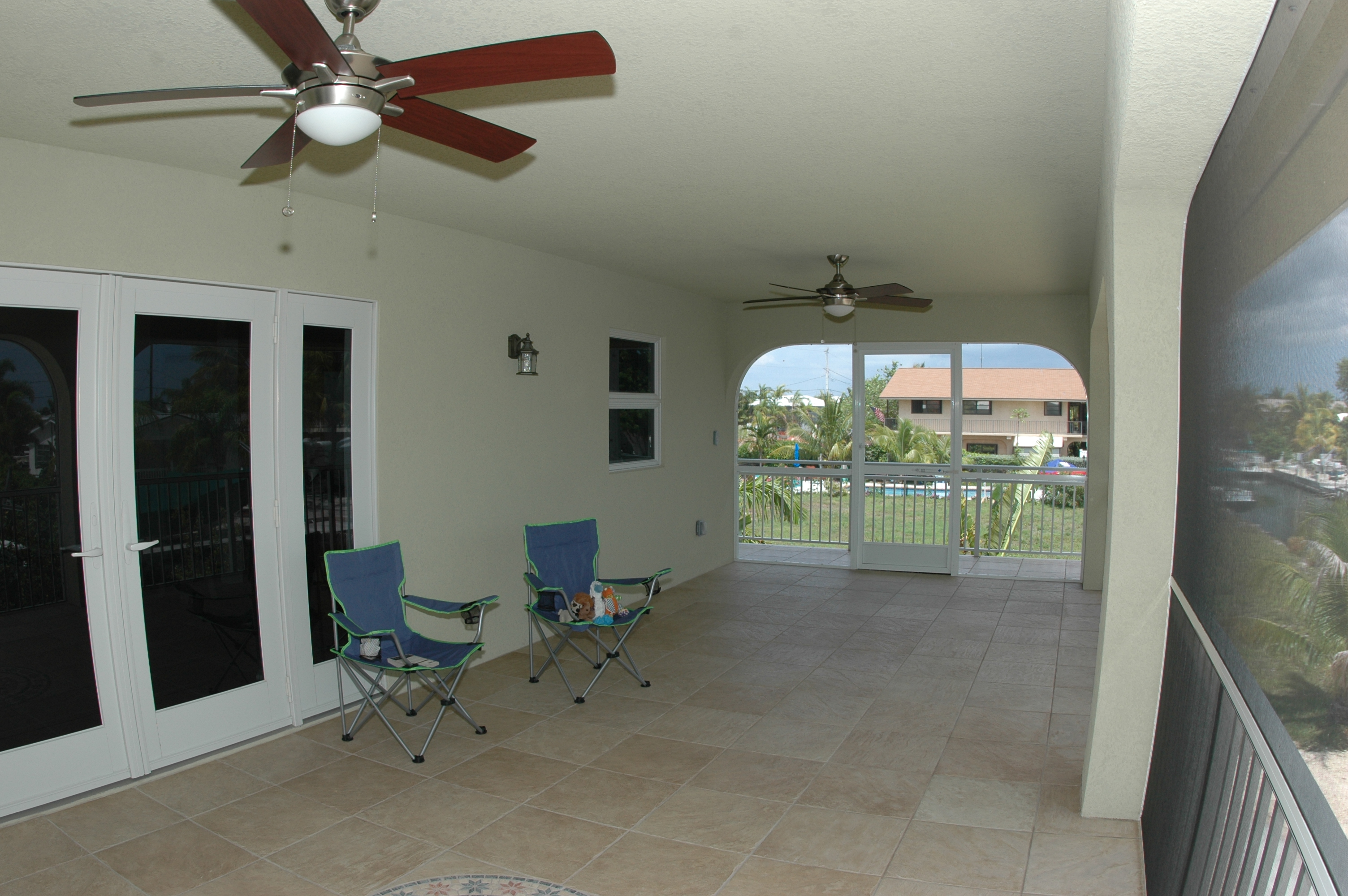
And this is probably the best part of the house - a very large screened in porch that overlooks the canal.
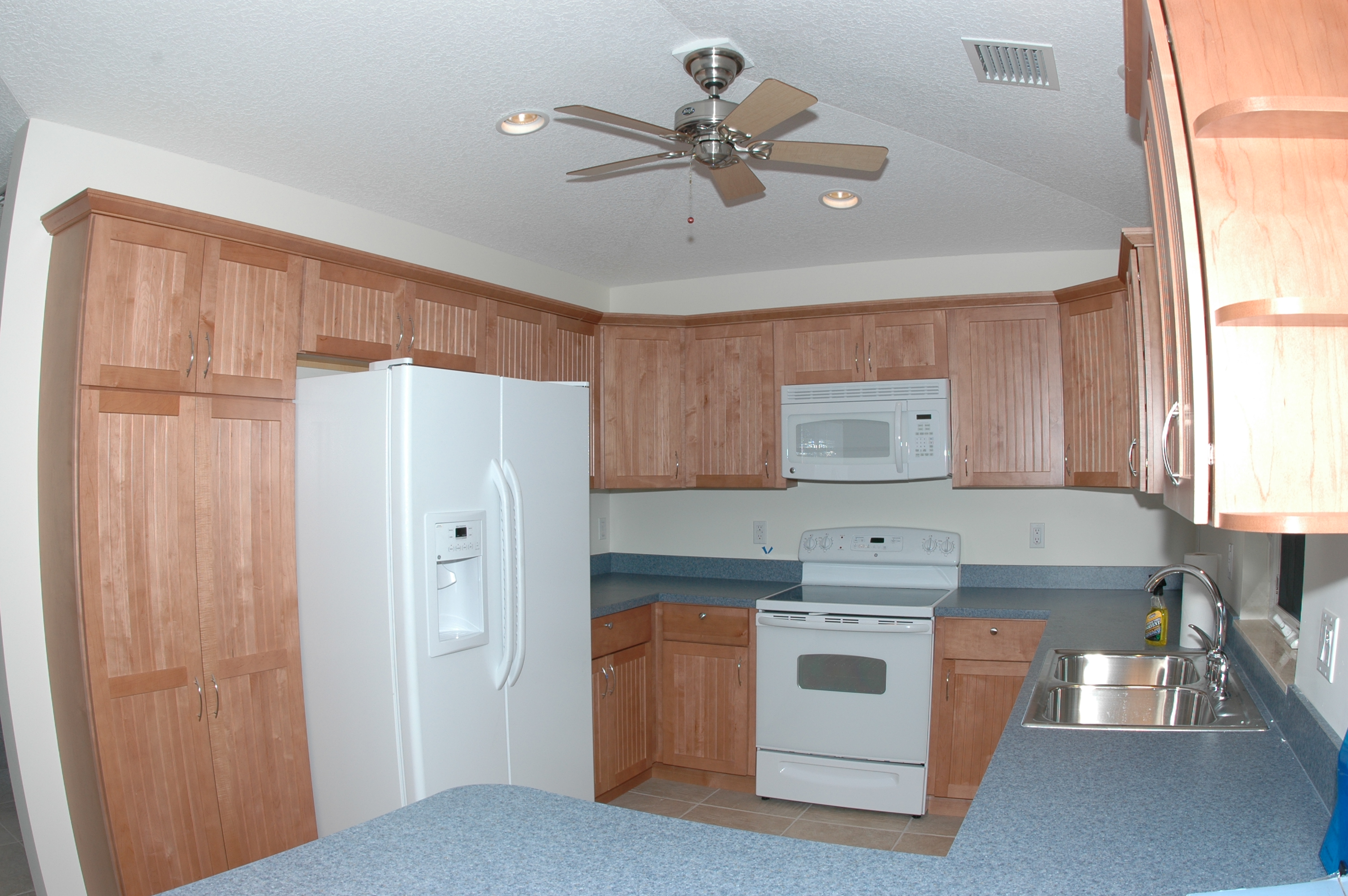
The kitchen is right inside the french doors.

This is the front entrance, breezeway and garage underneath the house. We've done just a little bit of landscaping so far - the landscaper tends to move on "island time" and we can't plant the big palm trees on the canal side until the seawall has been finished.
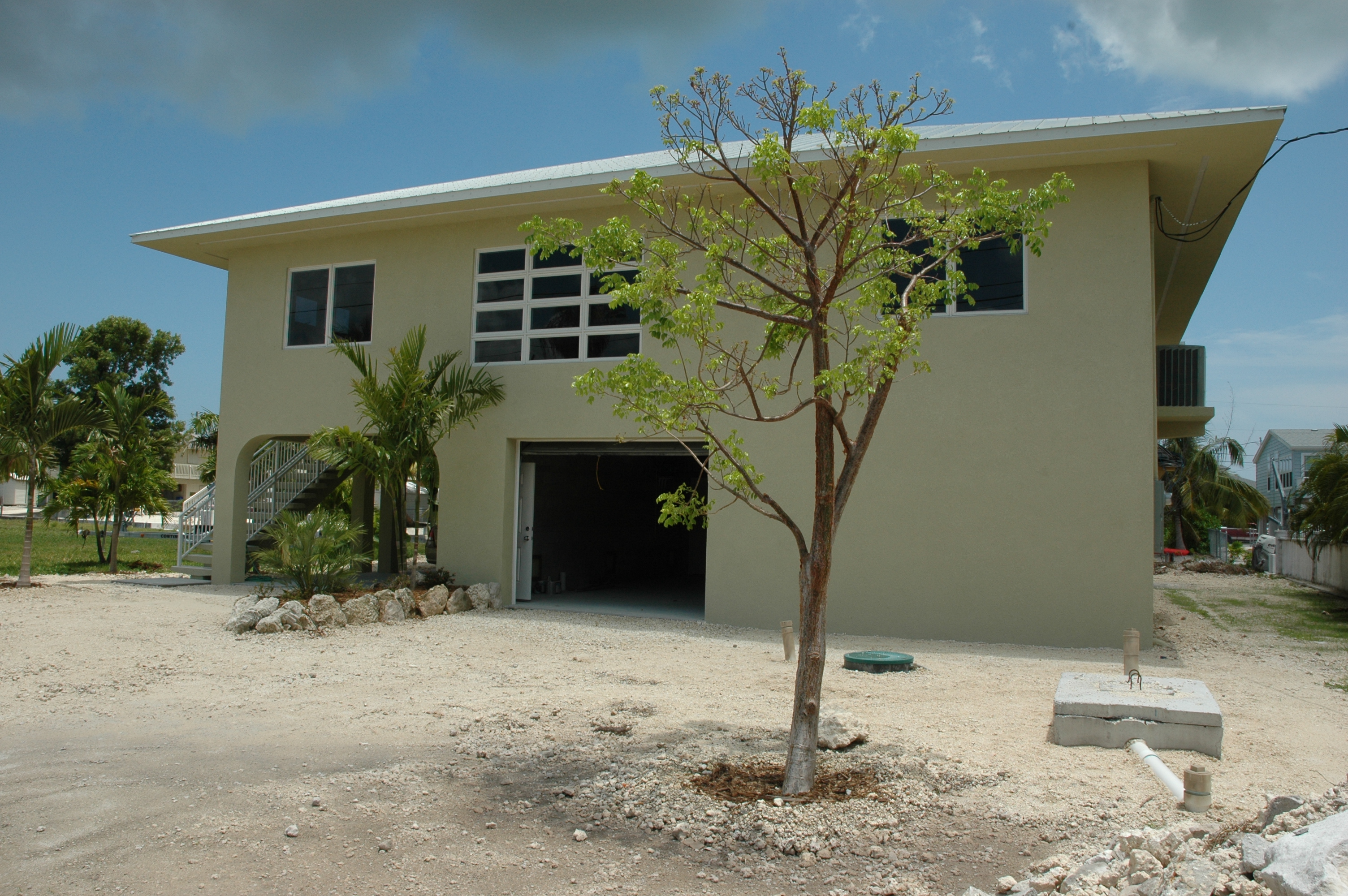
And there's the little gumbo limbo tree from the first photo.
